It's the sentiment seen all over LinkedIn, top business podcasts, and high-performing industry conferences: founder-led storytelling outperforms polished corporate messaging. The strongest stories today create tension, show vulnerability, and deliver insight without sounding promotional. Oftentimes, the more challenging perspectives, the better: Edelman’s 2025 B2B Thought Leadership Report found that 86% of decision makers value content that informs or challenges their point of view.
This approach has become a core driver of modern marketing performance, making an impact across teams looking to increase invitations to speak on stage, podcast bookings, and long-term brand authority.
Founder-led Storytelling in Action
With AI-generated content flooding feeds, audiences have developed stronger filters for authenticity. Founders who speak from lived experience signal credibility in a way brand copy simply can’t. Emotional storytelling also drives memory, engagement, and audience connection — making it one of the most effective tools for cutting through crowded ecosystems.
What works best today isn’t choosing one channel, it’s showing up consistently and strategically across all of them. Founder-led storytelling performs strongest with consistent on-stage appearances, podcasts, and social media. A viral social post can spark podcast invites. A strong podcast appearance can lead to stage bookings. A standout conference talk can fuel months of social content.
Below, we’ll use Gamma co-founder Grant Lee as a real-world example to demonstrate how founder-led storytelling performs across all three channels.
On Industry Stages
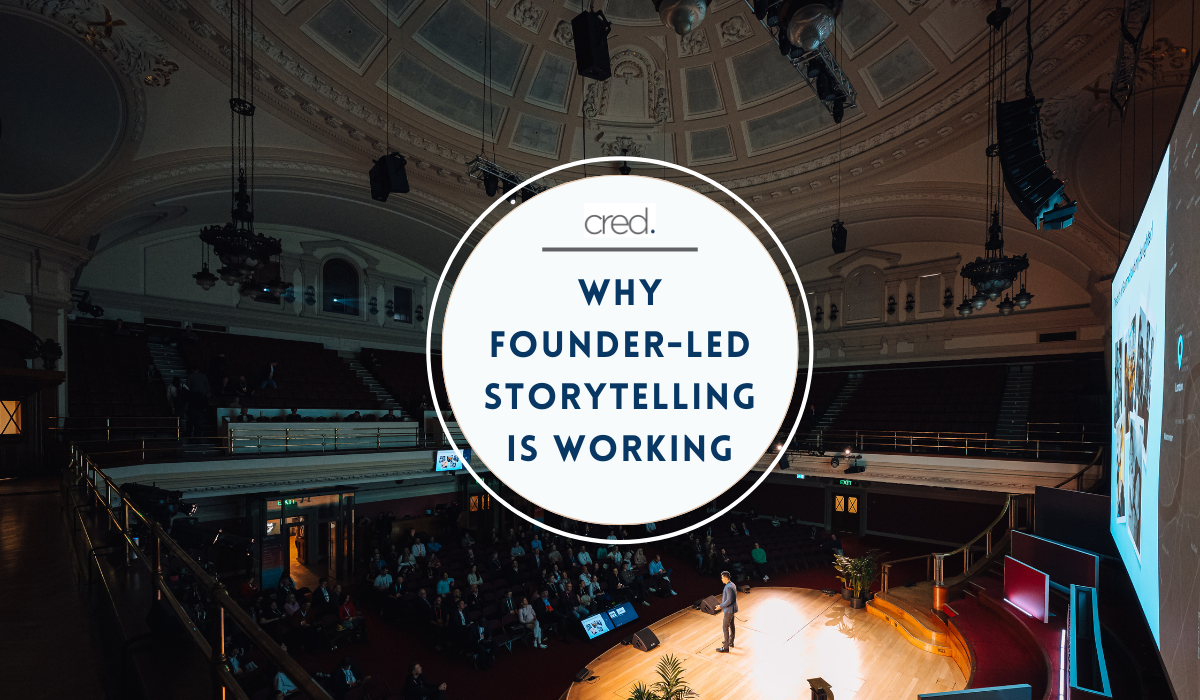
Event organizers are increasingly prioritizing founder speakers because audiences respond more to experience-driven narratives than theoretical presentations. This trend is confirmed by programming teams. As HumanX’s Head of Content Louise Tanner shared with us, storytelling and stage presence rank among the top three qualities she looks for when evaluating speaker submissions.
Example:
On Web Summit’s AI stage, Grant joined longtime tech journalist Mike Butcher to discuss how scaling through the AI boom forced Gamma to rethink the traditional startup playbook and maintain a lean, diversely skilled team. Rather than share another glossy founding story, he leaned into the pivots and messy moments in the company’s earliest days.
On Podcasts
Long-form podcast interviews give founders space to unpack nuance, emotion, and real decision-making context. This format has quickly become one of the highest-ROI channels for building executive visibility and credibility.
Example:
In an episode of Lenny’s Podcast titled “Dumbest Idea I’ve Heard,” Grant shared a candid look at the VC pushback Gamma faced in its early days. It may be tempting to frame the company as an overnight success, but acknowledging the tension and uncertainty along the way adds credibility and depth to the story.
On Social Media
Founder POV posts routinely outperform brand channels in reach and engagement. When amplified strategically, these narratives boost the reach of founder profiles and stage and podcast appearances.
Example:
Grant regularly shares candid highs and lows throughout his own founder journey on social media and extends engagement by spotlighting stories from other founders as well.
What Founder-Led Storytelling Actually Means
Founder-led storytelling is not a disguised product pitch or a sanitized company origin story. At its core, it includes:
High-stakes decisions
Moments of uncertainty
Strategic pivots and setbacks
Customer turning points
Personal tradeoffs
Uncommonly opinions
How to Package Founder Stories Without Killing Authenticity
As founder storytelling grows in importance, many teams run into the same pitfalls: over-scripting executives, polishing away vulnerability, bottlenecking content through excessive approvals, the list goes on!
But we get it, the tension is real — CMOs must protect brand standards while preserving the human voice that makes founder stories powerful.
Build a Founder Story Bank: Treat stories like strategic assets to give the team a scalable foundation without forcing founders to reinvent narratives every time. Create a centralized library that includes the following:
Origin moments
Customer success turning points
Leadership failures and recoveries
Product and market inflection points
Preserve Voice, Not Just Message: Edit for clarity, not personality. Founders should sound like themselves, not corporate spokespersons. Authentic tone builds trust faster than perfect phrasing.
Anchor Stories to Business Impact: The most effective narratives connect emotion with insight. Nailing this keeps storytelling aligned with business objectives by reinforcing brand relevance without turning the story into a sales pitch. Tie stories to the below:
Product strategy
Market shifts
Leadership lessons
Operational outcomes
Train for Structure, Not Scripts: Instead of memorized talk tracks, coach founders on narrative frameworks. Using a simple outline preserves spontaneity while maintaining clarity:
Setup
Tension
Decision
Outcome
Lesson
The Long-Term Payoff of Founder-Led Storytelling
When executed well, founder storytelling becomes a compounding growth asset. It moves executive visibility from one-off appearances to sustained influence. CMOs typically begin to see:
Higher speaking acceptance rates
Stronger earned media performance
Increased brand trust
More differentiated market positioning
Stronger recruiting and talent appeal
Founder-led storytelling is not just a trend, it’s becoming a pillar of modern brand building. Those who invest early in building authentic, scalable founder stories won’t just win attention, they’ll earn lasting influence.
Want help turning your executives’ stories into stage-ready narratives that attract the attention of event organizers and podcast hosts and resonate with audiences? cred works with leaders every day to translate real experience into high-impact speaking moments.
Subscribe to our newsletter to stay ahead of emerging speaking and thought leadership trends.