Speaking 101: How to Make Your Presentation Slides Less Boring


When giving a presentation, do your slides actually matter?

Absolutely! We live in a design-centric world, and visuals go a long way.

According to developmental molecular biologist and best-selling author John Medina, vision trumps all senses. It’s no wonder then that people following directions with illustrations do 323% better than those who follow directions with only text. For presenters, this means that visuals can be especially important in helping people retain information and remember your speech.

Here, we’ve rounded up a handful of tips to make your presentation go from boring to engaging and memorable:

  • Avoid overloading your slides with too much text. Try to keep it to one idea per slide. Really, you should think of every slide as an individual advertisement.

  • Use high quality photos instead of clip art. No pixelated images - there are better ones out there, we promise!

  • Choose your fonts and font colors wisely. Keep your typography clean, simple, and professional, and spare your audience from those hot pink or highlighter yellow tones.

  • Avoid standard templates. If you want to impress your audience, don’t use a generic preset. It's boring!

  • Use infographics to present information. Again, this goes back to people processing information more effectively through images.

  • Go easy on the effects and transitions. The transitions you use shouldn’t distract from your presentation, or make you appear less professional.

Need more tips on designing the best presentation? Check out this guide.

---

Not there yet, and looking to lock down your first speaking engagement? Give us a shout!


Speaking 101: How to Handle a Heckler


Dealing with hecklers is never fun. Fortunately for us, they rarely show themselves during presentations (most people are afraid of looking bad in front of large groups).

That said, it’s good to be prepared. As a presenter, hecklers can really throw you off and distract your audience. So what’s the best way to handle one?

We’ve rounded up five tips to help you get started:

  1. Never reward interrupting. When someone starts talking over you or chatting with their neighbor, keep going. Make them look rude.

  2. Respond if you need to. Sometimes you just have to respond to the comments. When this happens, make sure you’re addressing the whole audience and not just the heckler. If you only address the heckler, it may invite them to continue.

    • That said, at a certain point, it is okay to make a firm, direct request to the heckler to stop. Revert to Tip #3 and #4 for this.

  3. Don’t try to be funny. Unless you have experience doing stand-up, avoid trying to come up with a witty response - it may fall flat. You can still be pleasant, but deal with the heckler head-on.

  4. Stay calm and gracious. Shake off whatever the heckler has to say, and don’t let them ruin the rest of your presentation. Remember that you want to be the most mature and positive person in the room. Lose your cool and you might lose your momentum - as well as the rest of your audience.

  5. Don’t let it get personal. Focus on the subject matter, instead of attacking the individual. Avoid trying to get even.

Finally, remember that you’re serving the group’s needs - not the individual’s. Don’t let one naysayer drive a wedge between you and your audience!

Need more advice?

Check out these posts on dealing with hecklers and restoring order.


Speaking 101: How to Keep Your Branding Consistent


“Your brand is your promise to your customer. [It] is derived from who you are, who you want to be and who people perceive you to be."

- John Williams, Founder of CMOsmart

---

Whether you’re a VP within a large organization or a small business owner, an effective brand strategy is what gives you the edge in an already saturated market.

Your brand is what lets customers know what they can expect from you. Here, we've pulled together a list of four key elements you need to get the word out and establish a consistent brand:

  • Logo. You need a unique logo that won’t need to be changed every year. Once it's perfected, place it everywhere. Note: This may require an investment in time and resources. (Consider hiring a designer to ensure your logo is done correctly the first time.)

  • Messaging. Spend time developing your key messages, slogan or tagline, etc. There’s nothing like a catchphrase to capture attention and help customers remember what your company has to offer.

  • Templates and standards for marketing materials. To maintain consistency and establish your company’s visual brand identity, use the same color scheme, font, and logo placement on your website, social media profiles, and non-digital assets.

  • Voice. Again, consistency is important. Will your brand have a formal, polished tone, or are you more like Wendy’s, whose Twitter account roasts anyone brave enough to take them on? (Looking for more great social media voices?)

While each of these elements is important, your company’s mission is the most essential. Don't sweat the small stuff - like your logo - until after you've properly defined your company’s purpose and have the means to deliver upon promises. There’s no point in developing stellar marketing materials if your services are unreliable.

For more branding rules your company needs to survive, check out this article.


Why Smart CEOs Are Social CEOs


These days, it’s a given that your company needs to have an active social media presence. But what about the members of your C-suite?

A recent Edelman study revealed 78% of the highest-rated CEOs were present on social media channels. Executives like Marc Benioff utilize social media to not only share company updates but also provide insight into aspects of their personal lives.

When used correctly, CEOs can use platforms like Twitter and LinkedIn to expand thought leadership and boost marketing efforts. However, the benefits gained by engaging on social go beyond boosting business. Compared to peers who are not active on social media, Social CEOs are 89% better at empowering others, 52% stronger at communications, 46% more influential, and 36% better at cultivating networks. 

Here are four other reasons why CEOs should make time for social:

  1. Connect with customers: Not only does social provide a direct line of communication with those who purchase your product, but it’s a practical way to always have a finger on the pulse of your company and industry. A good example is when Airbnb’s Brian Chesky took to Twitter last year to ask people what they wanted his company to launch in 2017.

  2. Build trust: 80% of consumers are more likely to trust a company whose CEO uses social. Think of social as a place to share details that humanize you and prove your accessibility to the public.

  3. Strengthen public perception: In the midst of a PR crisis, brands who put their CEOs on the frontlines see a significant boost in public perception. For instance, AirAsia’s CEO Tony Fernandes was lauded for providing updates via Twitter after an AirAsia plane crash in 2014.

  4. Create brand awareness: John Legere builds time for social media into his day as CEO of T-Mobile. While sometimes controversial, he’s a prime example of the many ways you can use social to your advantage. He frequently engages in conversations with customers, and his public tweets help spread T-Mobile’s message and set the company apart as the “Uncarrier.”

For more insights about execs on social media, check out thesE articles, here and here.


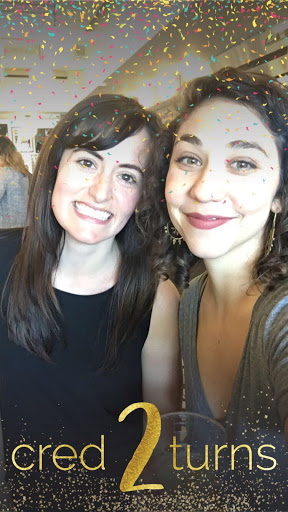
¡Holy guacamole! cred turns 2


It’s hard to believe, but cred celebrated its 2nd birthday last week!

How’d we celebrate? We started by combining two of our favorite things: margaritas and man’s best friend!

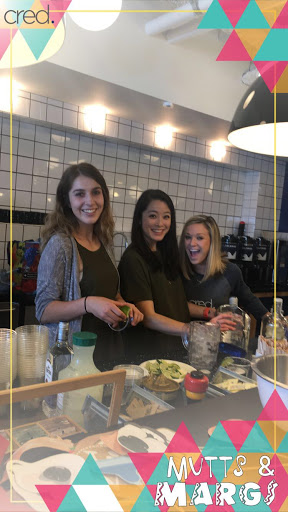
On May 5 (it’s true - our birthday falls on Cinco de Mayo), the cred crew hosted Mutts & Margaritas - a “nacho ordinary” happy hour and bake sale for everyone at 600 California WeWork.

Complete with photo props, custom Snapchat filters, and lots of four-legged furballs, ~120 people attended, making it WeWork’s largest happy hour to date. The team also sold a variety of homemade baked goods and raised close to $200 for a local SF animal shelter, Family Dog Rescue. (Fun fact: Kyle, cred’s Events & Operations Specialist, adopted Seymour, a blind/partially deaf Border Collie, from FDR last year.)

With two successful years under our belt, the party is just getting started!

Cheers to a great team and many more trips around the sun.

IMG_5183.jpg
 

Speaking 101: 5 Presentation Tips to Become Pitch Perfect

 
Workplace Meeting

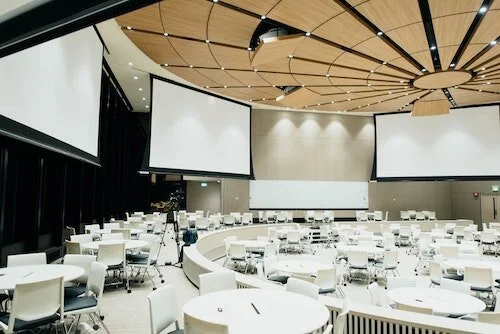
Whether it's for an intimate meeting or a huge conference, public speaking requires practice, and there is always room for improvement. Fortunately, there are a few tried-and-true ways to get ahead of the game.

This week, we’re taking pointers from Bill McGowan, Founder and CEO of Clarity Media Group, public speaking expert, and author of Pitch Perfect. We recently had the privilege of attending his talk at General Assembly, and also purchased his book!

Our favorite take-aways:

  1. Don’t buy time with the phrase: “That’s a great question.” Too often, it’s used to stall or flatter, and people can see right through it. According to McGowan, this phrase is as outdated as telling speakers to envision the audience in their underwear.

  2. Vary your delivery. Switch up the 3 P’s - that is, your pitch, pace, and projection. When delivering a key point, help it stick by slowing down, pausing, or changing your volume.

  3. Never start your presentation with an apology. Whether it’s 9 am and you’re the first session of the day, or 1 pm and the crowd is in a post-lunch slump, don’t feel like you need to preface your talk with a “I promise to keep this exciting…” or “I just want to take a little bit of your time.”

  4. Don't sweat the details. If something happened two years ago instead of three, don't worry about backtracking and correcting yourself. Press on, or you'll lose momentum - and audience interest.

  5. Stop wasting time with sign posts. That is, there's no need to begin your talk with a preview and/or give a recap afterwards. As McGowan says, don't tell your audience what you're going to tell them, tell them, and then tell them what you told them. Instead, dive right in!

For more tips, check out Top Tips for Effective Presentations


Yes, We Like Piña Coladas! (#credDoesCabo)


2017 has already been quite a year for cred - we’ve secured 850+ events, expanded the event management side of the biz, and seen a record number of referrals.

As a result, one SF afternoon in February, Executive Director Caitlin and Managing Directors Steph and Laura walked into the office, bumping “Escape (The Piña Colada Song)” with ice cold Coronas in hand.

The reason? A very unexpected announcement that the entire team would be going to Cabo! Cycling through stages of surprise, disbelief, and sheer excitement (but mostly disbelief), the rest of us were ready to spontaneously combust.

A few weeks later, we traded fog for sunshine and jetted off to Cabo San Lucas in Mexico for a long weekend. Not only did we have the chance to fit in some much-needed R&R, but it was a great team-building opportunity as well.

When we weren’t hanging out by the pool or catching a few rays, we took the time to really reflect on everything that’s brought cred to where it is today. We discovered the perfect team meeting location: Beachside with chips, guac, and margaritas; and also learned some fun facts about one other, including:

  • Managing Director Stephanie once had a pet gecko named Winston. (She later ended up getting a henna of him!)

  • Client Relations Jr. Associate Roya is a brown belt in karate.

  • Executive Director Caitlin and Events & Operations Specialist Kyle were both elected Senior Class President in high school.

  • Client Relations Jr. Associate Ariana has mad pool volleyball skills.

The ideal team meeting location...

The trip definitely left us refreshed, rejuvenated, and ready to accomplish our next goal:

Confirming our 1000th event!

(Stay tuned.)


Speaking 101: How to Maximize Audience Attention (When Everyone's Glued to Their Phones)

 
Crowd

With the average adult touching their phone around 2,617 times a day*, it’s only a matter of time before something distracts them from your presentation.

So what can you do? If you can’t fight them, join them. Here are a couple of ways to turn a distracted audience into an engaged one:

Live Polling & Results Display

If you’ve ever stood in front of a room of people, asked a question, and waited helplessly while no one felt confident enough to answer, your solution is live polling. Using an event app, you can ask your audience simple questions and give them the power to reply immediately using their phone.

After collecting the data, results can then be streamed in real-time to an on-stage display. This is a great tool for re-capturing your audience’s interest and focus. Live polling allows for active participation and takes the edge off speaking in a crowded room.

Networking & One-on-One Meetings

How often have you walked away from an event wondering what connections you could have made had you talked to everyone in the room? Using the event app as a meeting facilitator, attendees can now find out exactly who is in the audience, send invites for meetings, or be matched up with others with similar interests (ATTN entrepreneurs: this is an easy way to get ahold of that investor who’s been hard to reach). Event apps leave no opportunity unrecognized and allow audience members to engage both with one another as well as with speakers.

Guide your audience to action

Before heading off the stage and leaving your audience to digest your presentation, make sure you’re giving them the right tools to take action. Use your mobile events app to share your contact information and social media handles, include any presentation decks, and send through a quick survey to gather feedback after your talk.

If possible, ask the event organizer ahead of time to have your session recorded and include a link to the session in your email. This way, you can ensure a lasting impact on your audience.

Once you tap into these new forms of audience engagement, you will become a more compelling speaker, achieve a greater event ROI, and increase overall attendee satisfaction. Make sure you turn this generation's reliance on mobile devices into the next level of audience engagement.

For more on audience engagement via mobile device, read more here and here.


*Article published on NetworkWorld, IDG.