Speaking 101: How to Maximize Audience Attention (When Everyone's Glued to Their Phones)

 
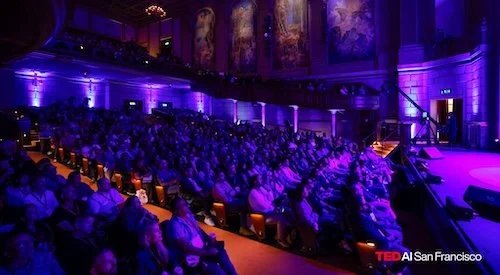
Crowd

With the average adult touching their phone around 2,617 times a day*, it’s only a matter of time before something distracts them from your presentation.

So what can you do? If you can’t fight them, join them. Here are a couple of ways to turn a distracted audience into an engaged one:

Live Polling & Results Display

If you’ve ever stood in front of a room of people, asked a question, and waited helplessly while no one felt confident enough to answer, your solution is live polling. Using an event app, you can ask your audience simple questions and give them the power to reply immediately using their phone.

After collecting the data, results can then be streamed in real-time to an on-stage display. This is a great tool for re-capturing your audience’s interest and focus. Live polling allows for active participation and takes the edge off speaking in a crowded room.

Networking & One-on-One Meetings

How often have you walked away from an event wondering what connections you could have made had you talked to everyone in the room? Using the event app as a meeting facilitator, attendees can now find out exactly who is in the audience, send invites for meetings, or be matched up with others with similar interests (ATTN entrepreneurs: this is an easy way to get ahold of that investor who’s been hard to reach). Event apps leave no opportunity unrecognized and allow audience members to engage both with one another as well as with speakers.

Guide your audience to action

Before heading off the stage and leaving your audience to digest your presentation, make sure you’re giving them the right tools to take action. Use your mobile events app to share your contact information and social media handles, include any presentation decks, and send through a quick survey to gather feedback after your talk.

If possible, ask the event organizer ahead of time to have your session recorded and include a link to the session in your email. This way, you can ensure a lasting impact on your audience.

Once you tap into these new forms of audience engagement, you will become a more compelling speaker, achieve a greater event ROI, and increase overall attendee satisfaction. Make sure you turn this generation's reliance on mobile devices into the next level of audience engagement.

For more on audience engagement via mobile device, read more here and here.


*Article published on NetworkWorld, IDG.


Speaking 101: How to Convince Others to Repeat Your Words


Repetition. Mnemonics. Visualization. These are but a few ways that people commit things to memory. Knowing this, speakers can - and should - utilize certain strategies to make their presentations more effective and memorable.

In this post, we’ll break down some thoughts on memory by Memzy's Managing Director and Cognitive Neuroscientist Carmen Simon, including portability, timelessness, and syntax.

Portability, or the ability to apply something in various contexts.

How “portable” is your idea or message? According to a study by Cornell University, phrasing affects memorability, and relies on both distinctiveness and generality. People are more likely to repeat phrases if they can apply them in multiple contexts.

Carmen’s recommendation? Create generic statements, using the present tense and limiting personal pronouns. Think of some famous movie lines or slogans, and think about how they could’ve ended up.

You’re gonna need a bigger boat. --> You’re gonna need the bigger boat.

The first instance, which is the actual movie line from Jaws, can be used pretty flexibly. Some use it when they’re simply in need of more resources. Had the writing team written the line as the latter, it would not have made any sense off the water and wouldn’t be as commonplace of a phrase as it is today.

Timelessness.

The best repeatable messages have a lasting impact and endure time. They focus on three aspects:

  1. A fundamental problem, one that is related to the audience receiving the message,

  2. Building a stimulating mental image, and

  3. The right level of complexity.

Quick note on the third point: There is a difference between profound complexity and intimidating complexity. Never overwhelm your audience with too much information that they cannot process.

Simple (but disfluent) syntax.

The order of words is important if you want people to remember what you have to say. At the same time, disfluency is also necessary.

That is, half the battle is making sure your statements flow together as a whole, creating what Carmen calls a “safe canvas.” Next is marking that canvas with distinct, disfluent words to provide cognitive roadblocks that elicit deeper processing. Seems counterintuitive, but it works. (Just make sure your entire message isn’t all over the place!)

For more on memory tips and tricks, listen to Dr. Carmen Simon on Persuasive Techniques for Business and Life here.


Speaking 101: Timeless Tips for Giving Effective Presentations

 
Public Speaking in a Meeting

Regardless of whatever industry you're in, it’s likely that you will have to give a presentation at some point in your life. And if you’re like any of our clients, maybe you’re actively speaking at conferences and events.

So what do you need to know about giving a presentation?

Here are 10 tips for delivering a clear, understandable, and thought-provoking message.

  1. Keep it simple. Unnecessary complexity should always be avoided. Don’t whip out a thesaurus before your presentation in an effort to sound more intelligent. Be real, be yourself, and use your own words.

  2. Stick to three key points. Narrow your focus - state your three points at the beginning of your presentation, and then reiterate them at the end. These are those key takeaways that your audience won’t want to forget.

  3. Engage your audience. Be interactive during your talk by finding ways to keep your audience involved. How? That’s up to you to decide! (Here are 8 ways to make your presentation more interactive.)

  4. Use visuals. One way to engage your audience (see point #3) is by using memorable visuals to emphasize your point. Stay away from too many bullet points and information overload.

  5. Be honest. Don’t try to fake passion for a topic that you don’t actually care about (or know nothing about). Your audience will see right through you.

  6. Move around. It’s the same as going to a concert. Audiences want to watch something dynamic. So walk around, use your hands (not too much though - it can be distracting), and make your point more visually appealing.

  7. Share stories. Help your audience relate to your message by incorporating a personal anecdote or two. Just make sure you don’t pepper the presentation with too much of your personal life…

  8. Be conversational. Remember that it’s not a lecture. We cannot stress this enough.

  9. Consult an expert. Always strive to improve your public speaking style and the quality of your presentations. Watch how-to videos, pay attention to other speakers onstage, read articles, take a course in public speaking, hire a vocal coach - always try to do and be better.

  10. Practice makes perfect. You can never practice too much. Rehearse in front of others or in front of a mirror, and don’t forget it’s okay to start small and then work your way up!

Interested in more? Here are 5 Speaker Fails to Avoid.

You can also view the original Entrepreneur article by Jacqueline Whitmore here.


2016: A Year in Review


A look back at 2016 and a look ahead to 2017.

To start things off, we'd like to say thank you to those of you who made 2016 special. Our team believes in one another and the impact of thought leadership through speaking, but it’s an even more incredible feeling knowing our clients also value the work that we do and believe in us too.

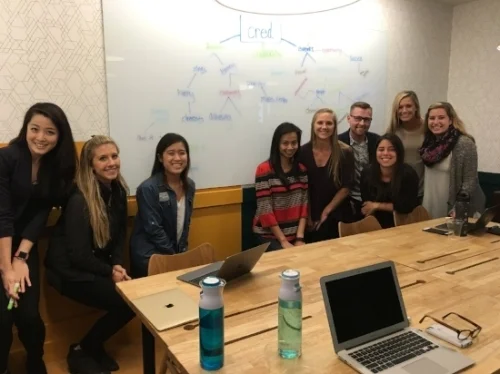
Team Huddle

In 2016, more referrals came through the door than ever (always a good sign). Additionally, cred secured its 500th event - and as of this blog post, JUST secured its 700th! Talk about traction. 

While we’re listing some cool achievements, cred also won WeWork: California Street’s Halloween costume contest and holiday office decorating competition. All in a day’s work, as we like to say. (Major props to Kyle, our Director of Decor, for bringing home the W!)

cred 101 Dalmatians

In 2016, we really honed in on what works well, as well as strengthened and expanded upon our relationships with events:

“Thanks for sending in so many great speaker suggestions. You really nailed what we were looking for.”

“You’ve obviously taken the time to study [our] format, tone and requirements and seem to be hitting a home run on proposals submitted for different clients.”

“Still can't believe how many folks you represented for [these] proposals. Really great stuff across the board.”

Looking forward to what 2017 has in store!

Stay tuned.


Event 101: Leverage Social Media for Promotion


Here’s the truth: Whether you’re hosting a 1,500-person conference or a small workshop for 30, your event needs a social media marketing strategy.

Why? Think about it. Why do you attend an event?

  1. Networking

  2. To learn something valuable (hopefully!)

And that’s what social media is all about - networking, developing, and sharing insightful content. In this way, social media goes hand-in-hand with your event. It can multiply your reach and in turn, boost your event’s reputation and overall number of attendees. Social media also allows speakers, exhibitors, and other attendees to interact before and after your event, thereby offering a more personalized experience. So where do you begin?

First, you’ll need to determine which platforms to use. 84% of event organizers use Facebook to promote their event, with 61% on Twitter and 42% using Youtube. What makes the most sense for your event / what platform does your target attendee audience use the most?

Social Media on Phones

Second, establish your goals. What do you want? More sales? More traffic to your event page and therefore more attendees? More awareness and reputation? Sit down, and think about what you're trying to accomplish before jumping into anything.

Third, create an action plan with content ideas. What clever or useful content can you provide your followers on social media? What is going to make people ‘like,’ re-tweet, star, and share your posts? Ultimately, why should people be interested in your event?

Finally, execute. Easier said than done - and that’s why there are people out there, dedicated to social media as a profession. Social media requires a strategy, and you have to devote time and resources to it. A few tips from us:

  • Visual content performs better. (In fact, researchers found that colored visuals increase people's willingness to read a piece of content by 80%.)

  • Pay attention. For your specific audience, when do you seem to be getting the most engagement? This kind of testing, for your particular audience, will require a little bit of trial and error - maybe it’s Tuesdays in the afternoon right after lunch,? Either way, consider trends, and replicate that success. 

  • Engage with other social media influencers that are relevant to your event and brand, and always, always reply to people, especially when you're just getting started. That’s how you build up loyalty.

For more tips and tricks, check out Eventtia’s articles on event promotion, here and here.


Need help planning your own event?

Contact events@credpr.com.


Social Innovation Summit Recap


On November 15 and 16, cred stopped by the Social Innovation Summit at the Pullman Hotel in Redwood City to participate in conversations around diversity, inclusion, entrepreneurship, and social enterprise.

IMG_0245.JPG

The Social Innovation Summit (SIS) is a twice annual, bi-coastal event that takes place in the Silicon Valley and Washington, D.C. “A global convening of black swans and wayward thinkers,” SIS brings together top execs and leaders to discuss how to leverage technology and innovation to affect social change.

Landmark Ventures COO Mel Ochoa, Splunk President & CEO Douglas Merritt, Director of UberMILITARY Todd Bowers, and President of Goldman Sachs Gives Anne Black were a few of the speakers at the event. Topics included:

  • Building a Culture of Innovation and Impact

  • Innovation for Good: Effective Public Private Partnerships

  • Exploring New Frontiers of Digital Healthcare

  • Diversity & Inclusion in the Workplace

  • Product Donations and Pro Bono, and more.

IMG_0250.JPG

One of our favorite presentations was by Baya Voce of The Art of Connection web series. She broke down the importance of connecting with others and how to build what she calls ‘anchors of connection.’ In her opinion, the most powerful way to create an anchor of connection is through ritual - no, not sacred ceremony but rather, a combination of repeated action and intention with your family and friends.

Aside from the general and breakout sessions, there was ample time for mingling during transitions - with great food and snacks to boot. All in all, it was a very well-run event with engaging content. Our only qualm? We wish the first few sessions had been a little longer - because they were that interesting!

We'll definitely be back next year!

---

To receive cred news, event recaps, and tips regularly, subscribe to our bi-monthly newsletter or follow @credPR on Twitter!


Big Data Showcase at VDC Connect2016


October 6th was an exciting day at the TIME Inc. building in New York City, as nearly two hundred people gathered for Venture Development Center’s first annual VDC Connect2016.

VDCConnect 5.jpg

Some of the biggest data practitioners and industry leaders came together to discuss the future of big data - where it currently stands, who is at the forefront, and the technology used to implement it. Moderated by VDC Chairman & CEO, Dr. Charles Stryker, it was a full day of panels as well as networking opportunities with attendees from AOL, Legendary Entertainment, IBM, Cisco, Avention, and more.

Charles set the stage by giving a big picture overview of what's happening with big data, followed by three panel discussions around companies in transition, analytics, and data implementations. Then, the content closed with three innovative companies taking the stage to present what’s disrupting the big data industry.

VDCConnect 7.jpg

Blake Sitney, CEO of Profound Networks, described how Profound compiles comprehensive databases of routable IP addresses on the internet in order to develop tools and platforms for maintaining, scrubbing, exploring, modeling, and interpreting data. CEO of UberMedia Gladys Kong discussed turning mobile data into actionable consumer behavioral insights. We finished the day off with Michael Hussey, CEO of StatSocial, who gave us a peek into how companies like StatSocial gather deeper, richer profiles of consumers by understanding their social activities, sourced by mining publicly available actions from individuals across the social web.

VDC Connect2016’s speakers and attendees winded down with a seafood platter feast, all while taking in the extravagant views from TIME Inc’s new space.

Another event in the books for the cred event management team!

---

Need help hosting your upcoming events?

Contact events@credpr.com.


Speaking 101: Getting on Stage for the First Time


“Like so many other aspects of the working world, getting into speaking gigs can be a catch-22. You need experience to get the gigs, but you need the gigs to get the experience.”

- Megan Berry, VP of Product at Rebelmouse

Conference Pic.jpeg

When it comes to speaking at events and conferences, expecting to immediately book the biggest gigs or get paid is unrealistic and honestly, not the smartest idea. It’s important to think practical and realistic to start, target the right events for your expertise and audience, and work your way up.

Even the most popular, high profile speakers have had to start somewhere - and with good reason, as the worst place to do your first presentation would be on-stage in front of hundreds of people! Becoming a great speaker requires practice and comes with experience. It means being proactive and investing both time and effort in your message, as well as your speaking strategy.

The result is a ripple effect, as one speaking engagement can open the door to more speaking opportunities. Plus, to get into some of those bigger, more established conferences, you usually need past speaking experience. (For those of you who are unfamiliar with the submission process, many applications even ask for videos of you speaking. Without one, you might not even be considered.)

So as Berry says, find the low-hanging fruit first. Not getting enough - or any - inbound requests to speak? Try meetups and panels. “Solo gigs are harder to get than panel gigs.” And there are dozens of meetups and small events happening in every city, every month. You just have to take the time to look for them.

Because remember: it’s a marathon, not a sprint.

---

For more tips on securing more speaking gigs, check out this article.

Need help getting started? Not sure what events would be interested in you? Contact us at speak@credpr.com.